With the parallel design
technique, several people create an initial design from the same set of
requirements. Each designer works independently and, when finished, shares his
or her concepts with the group. Then, the design team considers each solution,
and each designer uses the best ideas to further improve their own solution.
users are asked to test several variations of
the same design at the same time. The best areas of each design are then merged
into a single design.
Advantages:
Allows
a range of ideas to be generated quickly and cost effectively.
Parallel
nature of the approach allows several approaches to be explored at the
same time, thus compressing the concept development schedule.
The
concepts generated can often be combined so that the final solution
benefits from all ideas proposed.
Only
minimal resources and materials are required to convey product feel.
The
technique can be utilized by those with little or no human factors
expertise.
Disadvantages:
•Parallel design requires a number of design team members to
be available at the same time to produce the concepts
•It requires a major investment of time over a short period
for the design work to be carried out.
•Time must be allocated to compare parallel design outputs properly
so that the benefits of each approach are obtained.
Multimedia principle shows
that (people learn more deeply from words and pictures than from words alone) However,
simply adding words to pictures is not an effective way to achieve multimedia
learning. The goal is to instructional media in the light of how human mind
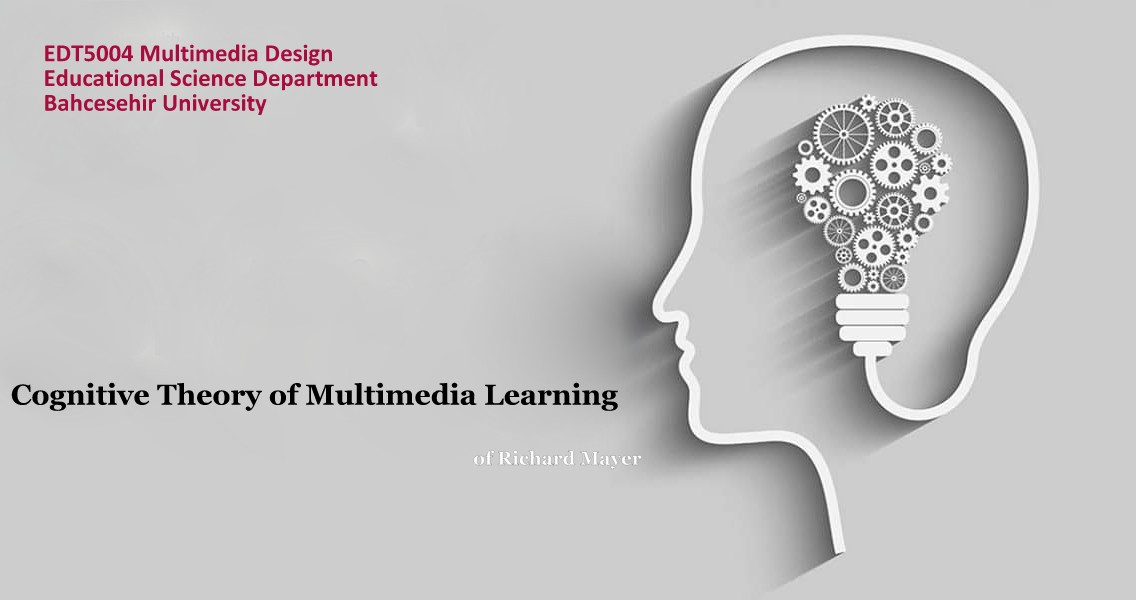
works. Mayer’s cognitive theory of multimedia learning stems from seminal
research from two established learning theories :Information processing theory
and cognitive load theory . This theory proposes three core assumptions when it comes to learning with
multimedia:-
Dual channel assumption : There are
two separate channels (auditory and visual) for processing information for a
human (sometimes referred to as Dual-Coding theory).
Second assumption is that humans are limited the
amount of each channel has a Limited
(finite) capacity .
Human engaged in Active Learning
by attending to relevant, selecting, organizing, into coherent mental representation
and integrating that mental representation with other knowledge .
Humans
can only process a finite amount of information in a channel at a time, and
they make sense of incoming information by actively creating mental
representations. Mayer also discusses the role of three memory stores: sensory
(which receives stimuli and stores it for a very short time), working (where we
actively process information to create mental constructs (or ‘schema’), and
long-term (the repository of all things learned). Mayer’s cognitive theory of
multimedia learning presents the idea that the brain does not interpret a
multimedia presentation of words, pictures, and auditory
information in a mutually exclusive fashion; rather, these elements are
selected and organized dynamically to produce logical mental constructs.
Furthermore, Mayer underscores the importance of learning (based upon the
testing of content and demonstrating the successful transfer of knowledge) when
new information is integrated with prior knowledge.
In other word ,Multimedia learning is based on the triadic model of cognitive load assuming people engage in three types of cognitive processing while learning : (extraneous ,essential and generative ) These three types of processing are limited to a learner’s available cognitive capacity . Multimedia learning theory is to reduce extraneous cognitive processing that does not serve the instructional goal ; At the core of this theory is the multimedia principle which states people learn better from words and pictures than from words alone .In order to reduce extraneous processing using these modalities , additional principle be followed. The coherence principal state people learn better when extraneous words ,pictures and sounds are exclude ; that’s mean only keywords ,pictures and sounds are include . Other principles are coming to take a role and play its part from the cognitive theory like Modality Principle (which states people learn better from graphics and narration than from animation and screen text.) and other main principles.
The essential cognitive processing that represents the critical content
of the instruction ; which is refer to Signaling Principle which states that people learn better with added cues to highlight
essential material.in addition to Segmenting and Pre-training Principles. The final
part is increase the generative cognitive processing which is responsible for
helping the learner organize and make sense of the essential material. The generative
cognitive processing related with Voice , Personalization and image Principles.
Multimedia design come to
put an end for the boring of power point and slides of the lectures of the
teachers when they trying to explain the material of what they want to give to the students .Hence , Richard Mayer
tried to give us more attention to our material and how to use them to develop impactful
content . Mayer makes a set of principles to make the multimedia easier , more benefit , interesting, knowledge
retention and avoid the boring on-screen text death ; the multimedia principles teaches us to use pictures to support learning
in addition to audio and effect sound .with
those multimedia principles will show a huge effect to our lectures to them
easy to understand , much fun and the most important thing is easy to remember …
These are the PRINCIPLES
of Multimedia Design for Mayer :
Coherence Principals:
the
information must be relevant to the subject .This will support the e-learning and
maximize learning.
Signaling principles (visuals);
Draw some arrows, Underlining, highlights, bold words to simplified
the idea helps the brain and the eye to follow what the next step and keep more
focus .
Modalities principality,
is all about orders of the
information . Narrated speaking should be related together.
Redundancy principle,
People do better and learn more deeply from animation and narration rather than animation ,narration and text on-screen (except foreign language learning class) it should be in one theme .
Spatial contiguity principle : pictures and text needs be at the same time ; place is important .
Temporal contiguity principle same as spatial but it’s about animation. It’s about time. It should be at the same time.
Segmenting principle, divide information (like steps of learning)
Pre-training principle; pre-teach: people learn more deeply from a narrated animation when they have had training in the names and characteristics of the main concept .
Emotional Design Principal : people learn better when on-screen characters display appealing colors , shapes and human-like facial expressions.
Personalization principle. Have informal conversation .
Voice principle, it’s better to not use robotic voice. Human voice is more convenient and more effective in recall.
Image principle, instructor image doesn’t matter to be on the image.





 Hassan Agha